

In Beauty We Thrive - Unselfing
Sagorika
The philosopher Iris Murdoch had a word for what she believed was happening in moments less visually ordinary, for when one saw landscapes, art, scenery that had been understood to be beautiful time and again. The word was unselfing. She used it to describe the experience of being taken out of the anxious, defended, calculating self that most of us inhabit most of the time, the self that is forever totting up advantages and guarding against loss, and she thought that beauty was one of the few things capable of removing oneself from that cycle. Her example was a kestrel. She described being caught in some resentful, brooding state, turned inward on her own grievance, and then seeing a hovering kestrel outside the window. In the moment of attention to the bird, the brooding self simply vanished. There was the kestrel. There was no longer very much of “her”, the person the mind constantly justified and defended. When the self returned, the grievance had lost its urgency, because for a few seconds she had been reminded that the world was large and full of things that had nothing to do with her, and this reminder, she thought, was the beginning of both art and goodness, which she suspected were closer to one another than most people allowed.
In a laboratory at Berkeley in 2013, researchers showed people photographs. One group saw landscapes that had been pre-tested as beautiful, mountains catching light, water holding colour, the kind of scene that stops a person for a moment before they know why. Another group saw landscapes that were pleasant but ordinary, the visual equivalent of a shrug. Then everyone was given a small sum of money and a decision about how much of it to hand to a stranger they would never meet. The people who had looked at the beautiful landscapes gave more. Not marginally more in a way that required statistical rescue, but reliably, repeatably more, across several versions of the study designed to rule out the possibility that the effect was an accident of the particular images used. Something about having looked at beauty had loosened their grip on what was theirs to hold on to and made it something to be used to contribute, to add value outside of their selves.
The researchers were, without necessarily intending to, providing laboratory evidence for something Murdoch had arrived at through introspection and moral philosophy several decades earlier. Beauty appears to reduce the salience of the self, and a self made temporarily less central is a self less occupied with its own protection, and a person less occupied with self-protection is, it turns out, measurably more generous to the people around them. The chain is not intuitive, since we tend to think of generosity as a moral muscle, something exercised through effort and principle, and here it was being produced almost involuntarily by the simple act of looking at a mountain.
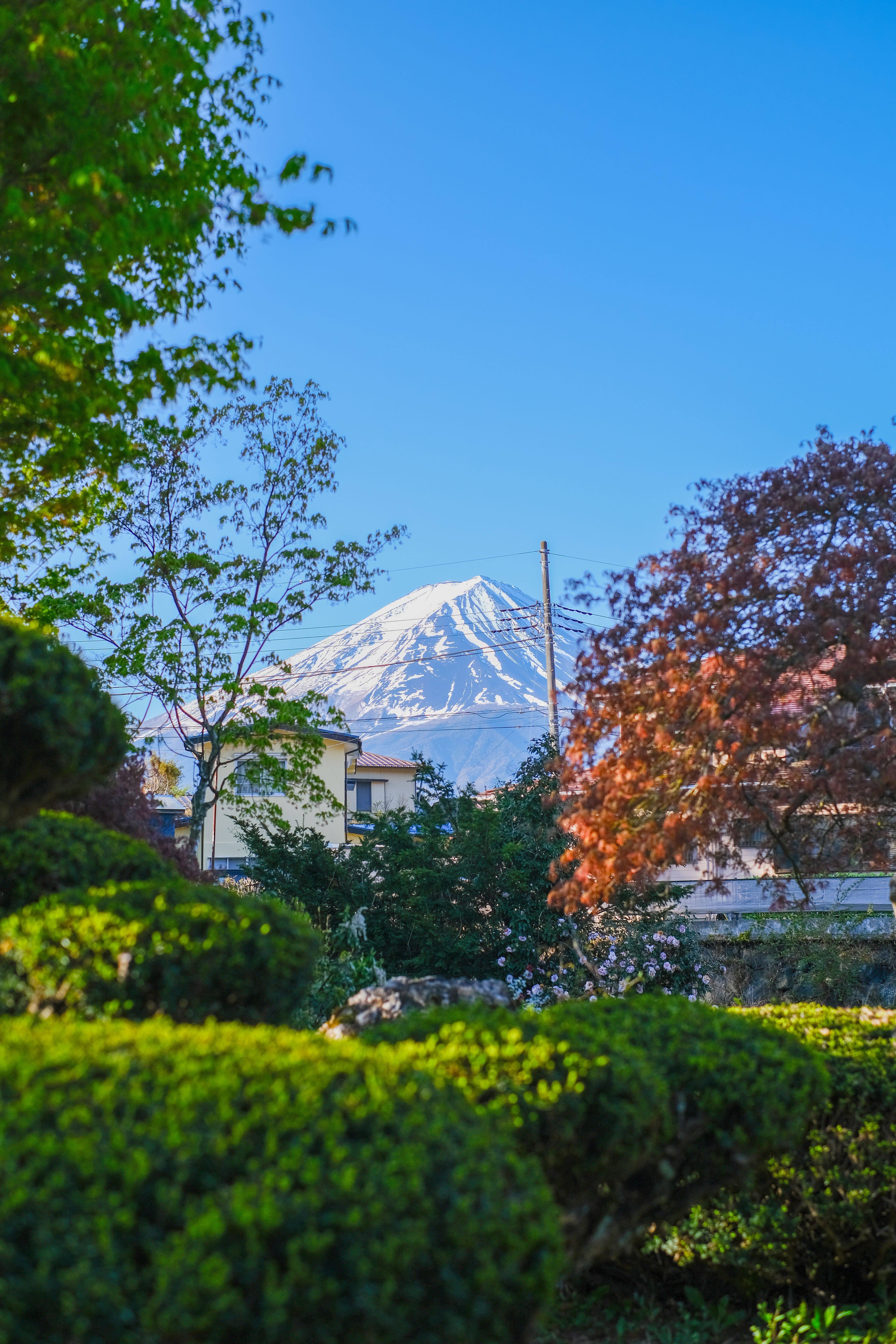
Most people, across most of human history, have not had reliable access to beauty, and the arrangement of the modern world has accentuated the gaps through information democratisation. The person who lives among proportion and light and materials that have been chosen with care, who moves through streets that were built to be walked rather than driven through, who can see a tree from where they sit, is receiving, continuously and mostly below the level of conscious awareness, a series of small invitations to unself. The person who lives among what the philosopher Roger Scruton called the modernist vernacular, the stacked horizontal layers, the blank facades, the spaces that were value-engineered until nothing remained in them that did not serve a measurable function, is receiving no such invitations. That person is left alone with the anxious calculating self for longer stretches, with consequences that the research is only beginning to quantify.
A survey conducted in the United Kingdom in 2023 found that more than three quarters of respondents believed the appearance of the buildings around them affected their mental health, and that a similar proportion reported an improvement in mood when they encountered a building they found beautiful. This is the kind of finding that is easy to wave away as obvious, and it is obvious, in the sense that everyone already knows it in their body, the lift of walking into a room with good light, the low grinding demoralisation of a badly lit corridor with a suspended ceiling and carpet tiles the colour of institutional resignation. The fact that everyone knows it does not mean that anyone acts on it, and the built environment that most people actually inhabit has been constructed almost entirely without reference to it, because the knowledge that beauty affects wellbeing sits in a different part of the culture from the spreadsheets that determine what gets built.
The work of Roger Ulrich, who in 1984 published a study that has since become one of the most cited papers in the field of healthcare design, gave the argument its hardest empirical edge. Ulrich examined the recovery records of patients who had undergone gallbladder surgery in a Pennsylvania hospital, and he found that patients whose windows looked out onto a small stand of trees recovered faster, required less pain medication, and were discharged sooner than patients in otherwise identical rooms whose windows faced a brick wall. The only variable was the view. The trees did something to the patients that the brick wall did not, and that something was significant enough to show up in the hard currency of hospital medicine, days occupied and analgesics dispensed. A generation of research into therapeutic architecture followed from this single finding, and its accumulated weight is difficult to dismiss, though the industries that build hospitals have proven remarkably capable of dismissing it when the alternative is spending money.
What is striking, moving across this research, is how consistently beauty behaves less like a luxury and more like a nutrient, something the human organism appears to require for proper functioning rather than something it merely enjoys when circumstances permit. The biophilia hypothesis, advanced by the biologist E O Wilson, proposed that human beings carry an innate affinity for the living world, evolved across the hundreds of thousands of years during which survival depended on reading a landscape correctly. This affinity does not disappear simply because a person has been relocated into a city of concrete and glass. The affinity remains, unmet, registering its deprivation as a low chronic stress that the person never consciously identifies, seeking it in escapism through endless scrolling or vacations if they can be afforded, in search of a trendy “soft life”. A great deal of what passes for the ordinary background unhappiness of modern life may be, on this reading, a form of aesthetic malnutrition, a slow starvation of a faculty that evolved expecting to be fed.
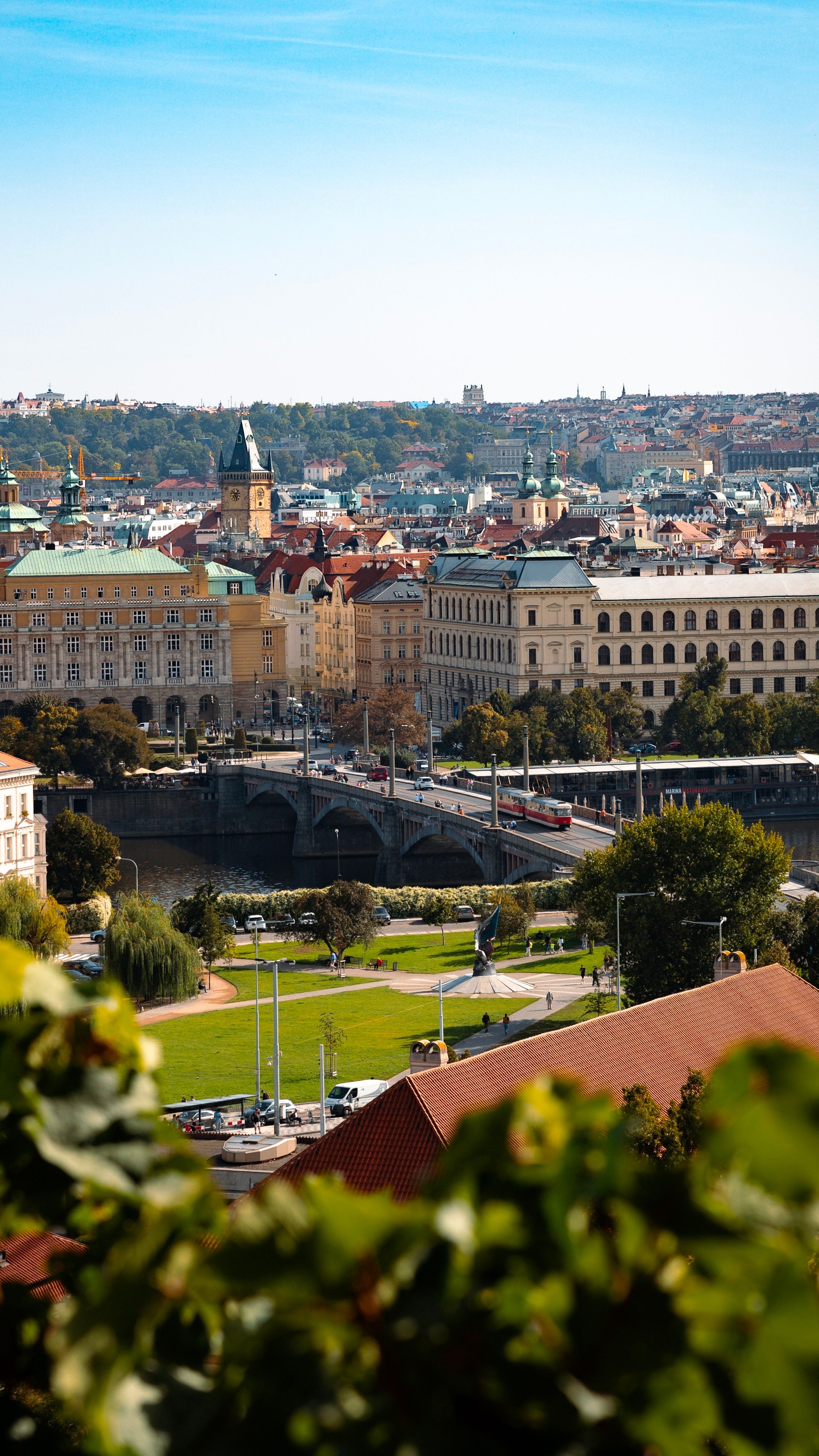
The people who have always understood this most clearly are the ones who built for beauty before there was any research to justify it, which is to say almost every building culture that preceded the twentieth century and a good many that persisted alongside it. The craftsman who spent a winter carving the screen that would filter light into a courtyard was not performing a cost-benefit analysis, and would have found the framing bizarre. The screen was beautiful because things that mattered were made beautiful. Beauty was understood as a form of respect, as consideration, for the people who would use the building, for the materials, for the act of making itself, and for whatever the culture held sacred. The idea that beauty was a premium to be added once the functional requirements had been met, an upgrade, a facade, almost a garnish that could be discarded if it added a paisa more, would have struck most of the world’s building traditions as a category error. Beauty was not separable from function in the way the modern construction industry has learned to separate them. A building that failed to lift the spirit was understood to have failed, in the same register as a building that failed to keep out the rain.
Something was lost when this understanding was replaced over the course of the twentieth century, by an ideology that treated ornament as crime and beauty as bourgeois sentiment, and the loss was moral as well as aesthetic. As Murdoch would have recognised it, a world with less beauty in it is a world that offers fewer occasions for unselfing, and a population offered fewer occasions for unselfing is a population left more often alone with the defended, calculating, frightened self, looking out solely for its urgent fulfillment. The research that connects beautiful environments to prosocial behaviour is, read in this light, a series of footnotes to a moral argument about what kind of people a place makes of those who live in it. Build meanly, and a place produces, at the margin and over time, meaner people, through the steady subtraction of the small daily invitations to look up and out and be briefly reminded of something larger than one’s own situation. The person raised among ugliness has been deprived of a nutrient rather than failing to acquire taste, and the correct response to that deprivation is not to congratulate oneself on having been fed, but to notice that the feeding was never evenly arranged, and to remedy it.
The neighbourhoods that receive beauty, the tended parks, the buildings designed by architects who were paid to care, the streets planted with trees and kept free of the visual violence of the worst commercial signage, are the neighbourhoods with money and the political capacity to demand better. The neighbourhoods that receive not ugliness, but a lack of beauty that deteriorates over time into something meaner - the value-engineered towers, the roads that sever rather than connect, the environments assembled from the cheapest materials that would pass inspection, are the neighbourhoods without the same care and the economics to drive it. The colonial city was built to be beautiful for the colonisers and functional, at best, for everyone else, and the postcolonial city has preserved the arrangement while changing the names, so that the districts of genuine beauty remain enclaves and the majority live amidst “functionality” that is sometimes just doublespeak for dysfunctional. Merely recognising a problem never resolves it, though, and education on what makes a space beautiful - greenery, colour palettes and small changes to internal arrangements can often function as uplifters. To resent that the responsibility of bringing in beauty sometimes falls on those most deprived of not only beauty itself but its knowledge and necessity may seem fair, but is unhelpful and infantalising, and thus democratising the knowledge and access to it becomes essential.
The people who suffer this deprivation are not passive in the face of it, and one of the quiet dignities visible in almost any neighbourhood anywhere in the world is the effort people make to introduce beauty into circumstances arranged to disregard it such as the potted plant on the concrete balcony, the painted door, the fabric hung to transform a bare room and the little flowers grown in a paint tin on a windowsill. These are, read correctly, acts of resistance rather than decorative afterthoughts, and they testify to how deep the need runs. People with almost nothing will spend some of the little they have on beauty, because the alternative, a life entirely without it, is correctly understood to be intolerable. The instinct that produces the potted plant is the same instinct that produced the carved screen, operating under harsher constraints, and in seeking if not intent, it can be recognised as the profound thing it is rather than patronised as a charming folk practice.

What all of this suggests is that the question of beauty is not always a question of taste or luxury or personal preference, but a matter of consideration and civilisation mediated through the environments we build. To make a place beautiful is to offer everyone who passes through it a small chance to be taken out of themselves, and to be returned to themselves slightly enlarged, slightly softened, slightly more capable of noticing that other people exist and have needs. To permit it to be made less so in the pursuit of a margin, is to withhold that chance and to leave people more tightly sealed inside the anxious self, from which little that is generous has ever emerged. The kestrel outside Murdoch’s window cost nothing and belonged to no one and was available to anyone who happened to look up. Most of the beauty that human beings have made for one another is arranged on something like the same principle. Like deliberate generosity, it may be offered to whoever passes. The generosity that beauty produces in a laboratory is a small thing, a few extra units of a currency handed to an invisible stranger. The recovery of beauty in the everyday is among the more urgent tasks facing anyone who builds anything, and its neglect is among the quieter catastrophes of the way we live now. Moreover, a lack of deliberate thought into aesthetics often detracts from functionality, forcing features and space into short term gains while forwarding its own collapse and remake.
Caroline Criado Perez, in Invisible Women, documents how the modern city was zoned according to a specifically male pattern of life, the single daily journey from a residential zone to a commercial or industrial one and back without care for childcare or hospitality, and how this separation, presented as rational planning, produced cities that work poorly for the people. Women, especially with fewer means and more of the burden of primary caregiving, whose days involve many short linked trips rather than one long one, the school drop, the market, the elderly parent, the pharmacy, the return are disproportionately affected by this lack of consideration and rationale. The zoning that scattered these destinations across separated areas did not only lengthen women’s journeys but hollowed out the street life that mixed-use density produces, the incidental encounters and the sense of a neighbourhood being inhabited rather than merely slept in, which is one of the quieter forms of beauty a place can offer and one of the first casualties of the badly zoned city.
The cities that have begun to reverse this have done so by returning function and life to the spaces between buildings. Vienna, under the planning work of Eva Kail since the 1990s has widened pavements, added pedestrian crossings and lighting and retrofitted steps with ramps until 60% of all journeys in the city came to be made on foot, which is both a mobility achievement and an aesthetic one, because a city walked is a city seen at human pace and human scale, its details available to be noticed in a way they never are through a windscreen. Barcelona’s superblocks, squared sections of the grid where through traffic is removed and the street returned to people, reclaimed the road surface as public space, and the reclaimed space filled with the things that make a place feel cared for, benches, trees, children, the old men who materialise wherever there is somewhere pleasant to sit. Mumbai’s Equal Streets experiment, which closes a stretch of major road to cars on Sunday mornings and hands it back to people who walk and cycle and simply stand about in it, borrows the same insight from Bogotá’s decades-old Ciclovía, that a road is only a road because it has been decided to be one, and that the same tarmac, relieved of its traffic for a few hours, becomes a place people are drawn to rather than through. The walkable city and the beautiful city often turn out to be substantially the same project, because walking is the speed at which beauty becomes perceptible, and a place designed to be driven through has already decided that its appearance does not much matter, since no one will be looking closely.
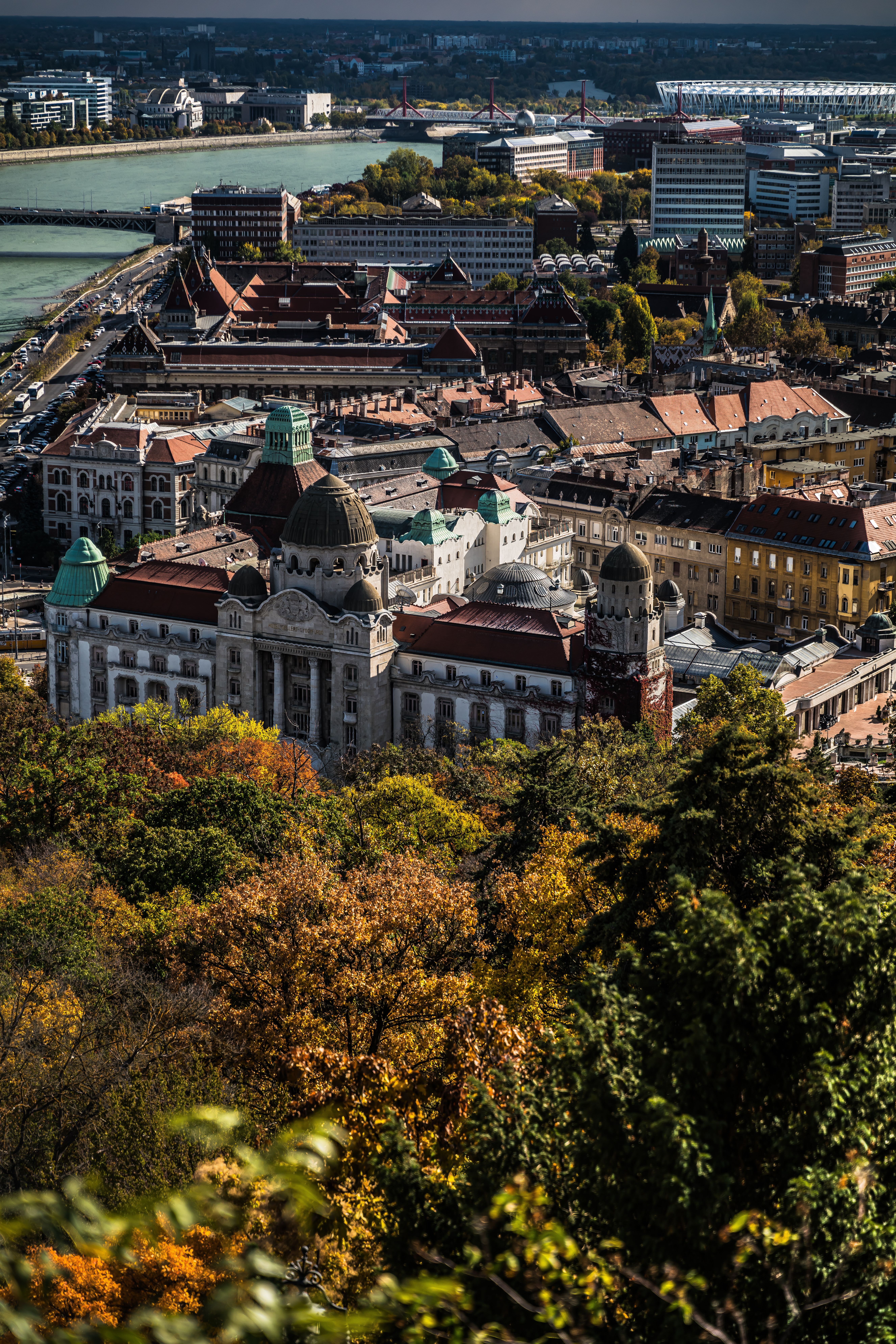
The obstacle everywhere is that land is finite and the competing demands on it, housing, industry, the agriculture that feeds the city and the infrastructure that moves it, are real and cannot be wished away in favour of parks and plazas. The open green space that older, less dense cities could afford is a luxury that a growing city under population pressure often genuinely does not have, and it is dishonest to pretend that every neighbourhood can be given a great public garden when the arithmetic of land does not allow it. In “the third place”, in Ray Oldenburg’s sense, the informal public space that is neither home nor work, does not require a great garden. It requires only that some space between buildings be designed for lingering rather than passing through which can be a courtyard, a widened corner, a shaded stretch of pavement with somewhere to sit or a square small enough to fit between existing structures and human enough to make people want to stay in it. These are cheap where a park is expensive, and they can be inserted into the dense fabric of a city that has no room for anything larger, which makes them the realistic unit of beauty for most of the places where most people actually live.
The gated community controls its own common land, and this makes it a place where the principle can be demonstrated without waiting for a municipality to act. The typical arrangement of such a community if it is large, though, squanders the opportunity, laying out its shared space as leftover margin, the strips of grass nobody uses, the token clubhouse, the road looping through it all as though the point were to move cars efficiently past the homes rather than to make somewhere worth walking. The same land, arranged differently, could hold the courtyards and shaded seating and planted corners that turn a collection of dwellings into something with the texture of a neighbourhood. The cost of doing so is imaginative before it is financial and is a matter of deciding that the space between the buildings is the point rather than the remainder. The idea that lingering and hovering in spaces that make it comfortable to do so is one that is lost in the urgency of the modern day. A residents’ association that grasped this could, within the boundary it already controls, produce for its members the daily encounters with beauty and with one another that the wider city has failed to provide, and in doing so demonstrate at small scale what a municipality might do at large. A space where a population meets itself and a place designed to make that meeting pleasant is a place considerately creating the generosity that beauty produces.
Culture is the living argument a people has with itself across time. return. enters that argument as a reader, not a referee.
