

Sexualising the Sacred and the Slave
Sagorika
On 3 September 2020 Armin Navabi, the Iranian-Canadian founder of Atheist Republic, informed Hindus on Twitter that the sexiness of their goddesses was not his fault, and proposed a hijab as the remedy. A week later he raised the prospect of becoming every Hindu’s stepfather should his relationship with Kali become serious, and by 14 September the artwork had gone onto a shirt, with a note that half the design cost was already recovered in sales. The language moved to ownership in October, when he announced that the goddess was his, that she was unhappy with her children, that she had chosen him and that everyone else should get over it. Four days later a second image appeared, Kali and Sita kissing, also on a shirt. Complaints were lodged with the police in Delhi and Mumbai, by which point the merchandise had been shipping for six weeks.
Navabi uses his assumed high horse of atheism to justify his outrage-dependent business model, but the assumption that placing a figure in a sexual context lowers her, is not atheist at all. It is Christian moral architecture, inherited whole and unexamined by a mind that once believed, then believes it has discarded religion. Augustine of Hippo’s “The Fall of Man” bound sex to shame at the root of Western Christian thought, and the association still surfaces in arguments over the body that have nothing to do with theology. He held the involuntary nature of arousal itself to be the visible mark of original sin, evidence that reason no longer commanded the body. Marriage remained a good in his account, but the desire accompanying even lawful intercourse he named a shame-producing disease, inherited from “the Fall” (of Adam & Eve) and impossible to escape. The framework outlasted its original theological moorings and unsurprisingly spilled into cultural ones. In 1912, Freud described patients for whom affection and desire had split into separate currents, so that a woman could be loved only where she was not desired, and desired only once she had been placed beneath a man’s own social and moral standing. He traced the split to a repressed idealisation of the mother, incestuous sensual feelings redirected onto figures who could then be “lowered” without penalty. Himself from a deeply religious family in Austria, struggling with the repression around sexual subjects which were taboo, Sigmund Freud’s interpretations of the mind tended to end up in the genitals and associated aspects, more often than not. The sensationalism around the use of such taboo topics in a seemingly scientific manner endeared him to elite society who found in him a reflection of their own repression, built into coherent frameworks, not necessarily substantiated by reality, but offering the relief of some explanation nonetheless. These idealisations and abhorrences arrive at the same architecture: purity and desire cannot occupy the same object, so desire is made to require debasement first. Everyone analysed in this essay, who has reached for a sexual image to insult a sacred one, is operating within that architecture instead of even consciously witnessing it, forget questioning.
Kali stands on Shiva wearing a garland of severed heads and holding one more, the heads being the ego and the corpse beneath her feet being consciousness without the power to act. Kamakhya, above Guwahati, is worshipped as a cleft in rock rather than as a face or a body. Lalita’s thousand names are recited as metaphysics by people who have never pictured her as a figure. Sita walks into forest, into fire, a queenly, headstrong princess who refuses to stay in the palace as her husband suffers, outsmarting her captor by leaving a trail of royal jewellery so she may be pursued by her beloved. Reading any of it as sexy requires discarding the content and retaining an echo that harps on sexuality as the sole defining aspect of the feminine; one that she can be ascribed if desired, and robbed of if not. Sacred or slave, she is without agency in such descriptions, far removed from the reality of her glory but small enough to fit in a childlike mind occupied overmuch with the excitement of hormones in a cycle of hedonism and worldly tangibility. The sacred is debased through removal of her context of consecrated divinity.

Aravindan Neelakandan made the point within days of Navabi’s tweets, observing that removing the goddess from her sacred context is an abuse of culture at one level and self-abuse at another, and that the shallowness belongs to a Western-trained free-thinking mind degrading itself by degrading what it cannot otherwise touch. Nobody prints Kali brewing tea and waits for a police complaint. These images work only on the assumption that sexual availability degrades whoever is placed in it, which is exactly the assumption Augustine formalised and Freud diagnosed. The assumption goes unstated because stating it would contradict the popular sex-positive account justifications given for such sensationalism. Sexual content that carries no shame has none to pass on to its subject – it is appreciated and considered contextually correct and the mind, thus, tends to simply move past it. Kama has a temple, Badami and Khajuraho have stood on Indian land for a thousand years in daylight, unhidden.
Christianity’s own most sacred figure has suffered the same treatment, sometimes at the hands of a curious believer rather than a mocking outsider. In 1999 the Chicana artist Alma López made a digital collage titled Our Lady, showing the Virgin of Guadalupe with hands on her hips and her gaze level, dressed in roses, held aloft by a bare-breasted butterfly angel, her cloak carrying images of Coyolxauhqui, the Mexica moon goddess dismembered by her brother. Shown at the Museum of International Folk Art in Santa Fe in 2001, the work drew protest rallies, prayer vigils and bomb threats, was renamed the “Bikini Virgin” in the local press. Archbishop Michael Sheehan of Santa Fe called the image a tart and a street woman, and the crudeness of his language only named a real violation. She was no longer the Virgin of Guadalupe. A figure who should stand outside the frame of sexual display had been placed inside it, by someone who called it reclamation. This interpretation outside its context, a post-modernist dissection aims to subdue the metaphysical to the physical, but with cruder force than a debate can.
Around the year 999, at the Icelandic Althing, a convert to the incoming Christian faith was outlawed for calling the Goddess Freyja a whore, using the accusation as a weapon against the religion he had just left. A Christian author writing centuries later went further, inventing a tale of Freyja trading sex with four dwarfs for jewellery, a fabrication designed to justify the old gods’ abandonment rather than anything drawn from what the Norse themselves had believed. Discrediting the sacred feminine by sexualising her is not a modern atheist invention. It is what the convert and the ex-believer have always reached for.
White slaveowners and overseers raped enslaved women, routinely, across the American South and the Caribbean colonies alike. Formal law and social codes forbade sex across the colour line. The men who owned plantations broke that law constantly and were never punished for it, because the same society had already declared enslaved women constitutionally promiscuous, incapable of being violated since always assumed willing. A master raping the woman he owned was not committing the crime his own law named. He was satisfying an appetite the law told him she had provoked by her mere existence as a female. Not always a woman, though, because many were mere children. However, the idea that the female entity existed to provoke, and was forever a willing subject to be done unto, much as a goddess at the hand of a nonbeliever.
Slave traders sold enslaved women for the specific purpose of rape and forced prostitution. The traders called these women “fancy girls” and the practice “the fancy trade”. Buyers in New Orleans paid more for a woman intended for sexual use than for a man intended for field labour. In 1818 a trader sold a twelve-year-old girl named Chloe for $1,800, while three adult male field hands sold the same year for $1,250, $1,250 and $1,500. Traders advertised these women as smart, honest and temperate, and dressed them well before auction, marketing their rape as a refined purchase to elite society that could afford it in clear view of their world.
Thomas Jefferson held Sally Hemings as his legal property from the time she returned with him from Paris as a teenager until his death. He fathered at least one of her six children, confirmed by a paternity DNA test in 1998 and corroborated by documentary evidence. She had no legal capacity to refuse him. He never freed her. She was property, and a man cannot violate his own property, he can only use it. In the debasement of the sacred and the slave, the idea that a woman is always without agency, in the metaphysical world and in the material one, sexualisation is what cements it. What has been celebrated in much of the world prior to organised Abrahamism has come to be a tool of subjugation for the coloniser and the intellectual, always in guise of masterhood over the feminine.
Herodotus, writing around 450 BCE, told his Greek readers that every Babylonian woman was required once in her life to sit in the precinct of the goddess Mylitta, Herodotus’s name for Ishtar, and have intercourse with a stranger who tossed a coin into her lap. The claim entered Western scholarship as fact for over two thousand years and was used to characterise the entire cult of Ishtar, one of the most powerful goddesses of the ancient Near East, as one of institutionalised temple prostitution. Stephanie Budin’s 2008 study of the sources concluded that sacred prostitution never existed as a real institution anywhere in the ancient world, and that the myth arose from over two thousand years of mistranslation, false assumption and faulty method rather than from anything Herodotus’s informants actually described. Budin argues Herodotus was contrasting what he framed as civilised Greek custom against a barbarous East, and that later writers who repeated the claim, including Strabo and the early Christian polemicist Lucian, were copying Herodotus rather than reporting anything they had independently confirmed. A goddess who represented war, love, justice and the morning star was reduced, for two millennia of Western readers, to the presiding deity of a brothel that scholarship has now shown was invented.
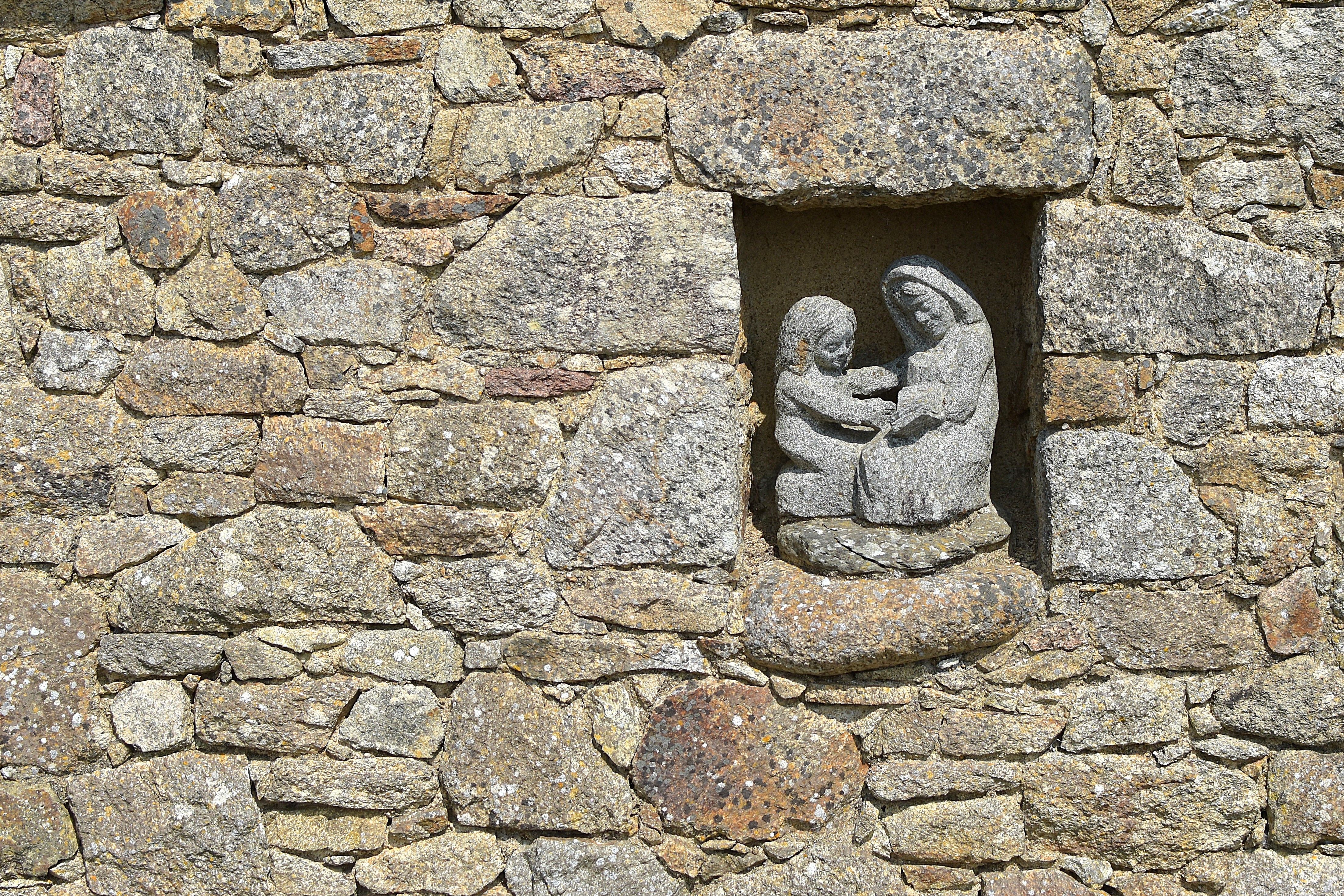
In medieval Ireland and Britain, hundreds of stone carvings known as sheela na gigs were set into the walls of parish churches, depicting naked women pulling their vulvas open with both hands. Weir and Jerman, examining their placement and grotesque rendering by medieval standards, argue the figures represented female lust as something hideous and sinfully corrupting, warnings carved into the fabric of the church itself. When the first sheela was formally reported to antiquarians in 1840, the man who found it in a Tipperary churchyard wall wrote an angry letter describing it as an ill-executed piece of sculpture promoting the grossest ideas. Victorian clergy subsequently removed, and in some cases, destroyed the carvings that had survived on churches for six hundred years, and museums kept the remainder in storage rather than on display, out of what curators for over a century described as prudish aversion to the subject matter. Ancient Javanese and Balinese temples often feature somewhat similar grotesque, fierce, or naked subordinate spirits, dwarfs, and ogres, sometimes as an invocation to fertility, sometimes to drive away malevolence. Whatever the figures in Ireland originally meant, whether a fertility survival or a guardian of sacred ground, the mechanism that finally erased most of them from view was identical to the one applied to Kali and to Guadalupe: a female religious image was read first through what its nakedness stands for in western thought.
In 2008, archaeologists in southwestern Germany uncovered a 35,000-year-old ivory carving of a woman, one of the oldest figurative artworks known, and the discovery was announced to the public in language that set the pattern for how it would be received. The archaeologist who led the excavation stated there could be no doubt the depiction of enlarged breasts, buttocks and genitalia resulted from deliberate sexual exaggeration, and a colleague described the figure as explicitly and almost aggressively sexual. Newspaper coverage followed with headlines calling it a precursor to Playboy and the earliest pornography, and the museum housing a related figurine advertised it to visitors as either an earth mother or a pin-up girl, offering no third possibility. The Paleolithic archaeologist April Nowell has argued that reading these thirty-five-thousand-year-old carvings as prehistoric pornography functions as an excuse to root modern behaviour in an invented ancient precedent. That the interpretation says more about the assumptions of the scientists doing the looking than about the intentions of the people who carved the object is only obvious when read outside the framework of fear emanating from sexuality as mere reality, if not empowering then at least not disempowering. A figure that predates writing, agriculture and the wheel was still, on the day of its announcement, run through the identical binary Navabi applied to Kali: sacred or sexual, with no framework offered for a culture in which those two categories might never have been separate at all, never enslaved through a masterly dominance of the feminine, in material or metaphysical. The binaries that create these are as stupid as anything reductive, yet internalised by too many exactly due to its simplistic outlay.
Notes:
Navabi’s posts and shirt sales are documented in IBTimes India, 15 September 2020; Aravindan Neelakandan’s response in Swarajya, 6 September 2020. Augustine’s position on concupiscence is drawn from De nuptiis et concupiscentia and secondary analysis at The Windmill and Resurrecting Orthodoxy. Freud’s 1912 essay is cited from LacanianWorks and the Wikipedia summary of the Madonna–whore complex. Hjalti Skeggjason’s outlawry is recorded in the Íslendingabók; the reading of Sörla þáttr as a Christian composition follows the Encyclopedia of Religion entry on Freyja. The Alma López material draws on contemporaneous reporting collected in Our Lady of Controversy (Texas, 2011) and The Santa Fe New Mexican. Ka’ahumanu’s 1830 proclamation is preserved in Kamakau; Twain’s account appears in Letters from Hawaii, 1866. Thistlewood’s figures come from Trevor Burnard, Mastery, Tyranny, and Desire (UNC Press, 2004), p. 156. The 23andMe finding is cited in Jonathan Kennedy, Pathogenesis. Baartman’s history follows the Royal Museums Greenwich record and the Art-Law Centre case file at the University of Geneva. Anti-nautch material draws on the 1892 petition, the 1881 Madras census and Davesh Soneji’s Unfinished Gestures (Chicago, 2012). Zia Pueblo material comes from New Mexico Magazine and the 2014 report to the Indian Affairs Committee of the New Mexico legislature. Budin’s The Myth of Sacred Prostitution in Antiquity is a peer-reviewed monograph, cited via academic review summaries. The sheela na gig material draws on Weir and Jerman’s scholarship as summarised in the Wikipedia entry and on Barbara Freitag’s research as reported by Atlas Obscura and the Sheela na Gig Project. The Hohle Fels material is sourced from Slate’s interview with archaeologist April Nowell and from Newcity’s academic paper “Science, the Media, and Interpretations of Upper Paleolithic Figurines.”
