

The Empty Aesthetics That Are Stealing Energy
The Editors
In a country where the daily texture of life involves power cuts, corrupt police checkpoints, roads that cost hours and fuel that costs more than it should, ease is not a lifestyle philosophy. It is a specific and vivid absence, understood, deeply desired, ease is the thing that is always almost within reach and rarely quite there. When “soft life” began circulating in Lagos influencer communities around 2019 and 2020, it named that absence precisely, a life of comfort and zero stress, without sapa, without village people, without the particular exhaustion of “Lagosing”, the verb Nigerians use for the labour of navigating their own city. By the time it reached TikTok’s “For You Page” and then the UK and US, it had been translated into a different language entirely, to candles, slow mornings, neutral linen and matcha lattes photographed in good light. The specific irony of a Lagos concept becoming a white Western aesthetic of conspicuous ease was apparently so lost in transit that world over, the idea of the “soft life” aesthetic brings to mind the faces of generic white American influencers on Instagram posts.
Thorstein Veblen described the mechanism in 1899 in The Theory of the Leisure Class, where he observed that what the very wealthy display is the ability to waste wealth, that leisure becomes precious precisely when it can be performed, that a woman changing her clothes four times a day or a man lighting a cigar with a banknote is demonstrating that they have more money than they need to account for. The soft life as it circulates now is a performance of this kind, except that it has been democratised by the algorithm into something aspirational for people who have not yet built the portfolio that would make the performance sustainable. The slow morning requires a controlled schedule, the neutral linen bedroom requires an apartment that only a certain income makes possible. The spa day and the international wellness retreat and the carefully curated stillness all require, underneath them, a cash position that the content does not show, because showing it would collapse the aspirational distance between the creator and the viewer that the idea depends on to function.
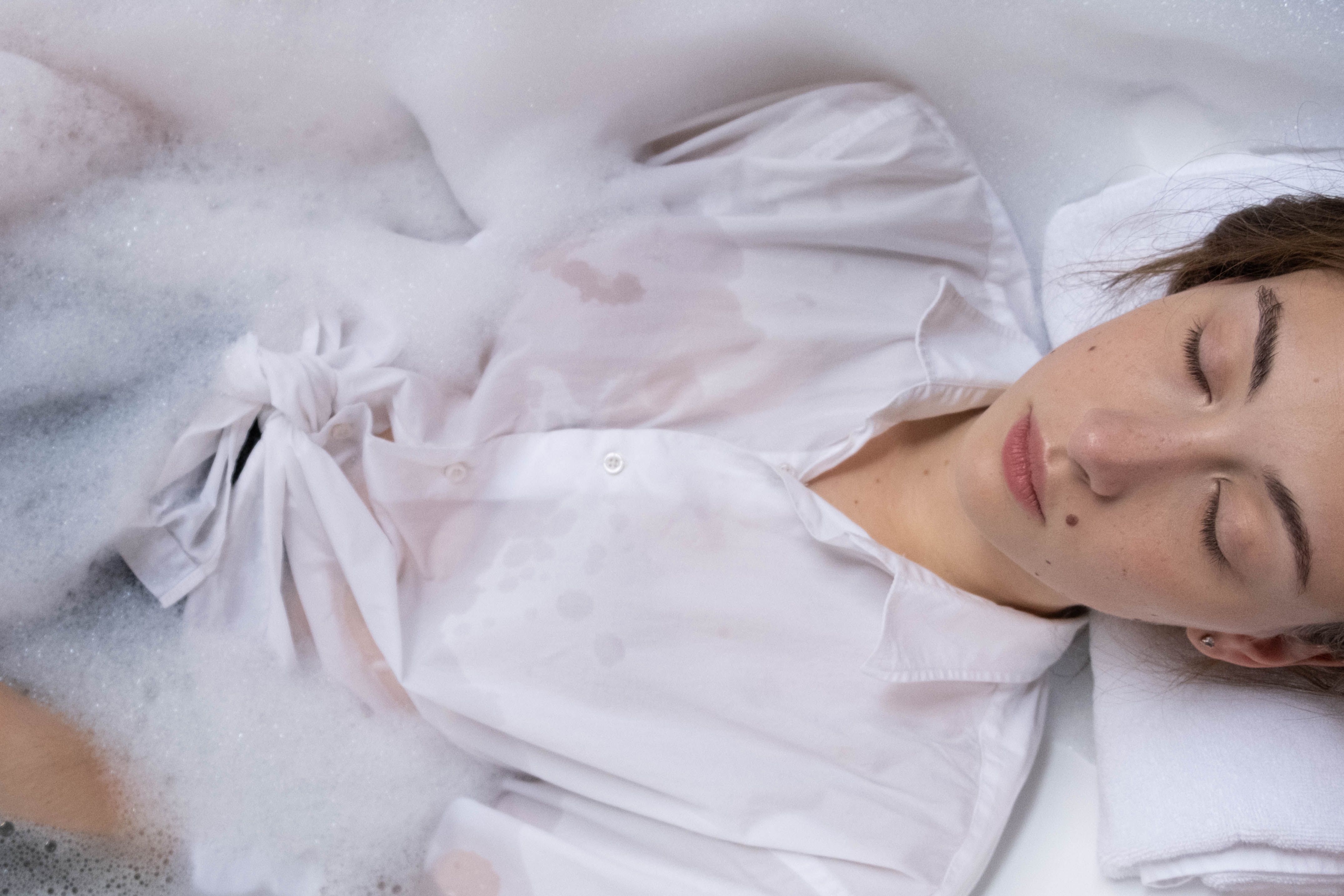
A 100,000-follower beauty creator earns between $8,000 and $15,000 a month from brand partnerships, roughly ten times what the platform pays them in direct revenue if the content is an advertisement and the advertisement looks like a morning routine her followers can aspire to. A $60 skincare palette costs $5 to manufacture. Brands pay a creator $2,000 to $5,000 to feature it because a single viral video can drive 10,000 to 50,000 sales, and the creator’s credibility, built through months of apparently authentic self-documentation, is the mechanism that makes the viewer trust the product the way they might trust a friend’s recommendation. Hailey Bieber launched Rhode in 2022 with this structure already fully assembled, the glazed donut skin she had been photographed with for years becoming the aspiration that her skincare products offered to sell, so that the product was already endorsed before it launched. Rhode’s valuation reached reported hundreds of millions within two years.
The clean girl morning routine as a content format rests on the concealment of economics and effort that goes into it. This is not new in fashion. For decades, the idea of French chic has been sold as an ideal of a woman with flair but without much care for perfection. The je na sais quoi they lived looked down upon the logo showing much like the clean girl living the soft life must look like she isn’t wearing layers of makeup (except in her GRWM video). This typically involves a decade of trial, a considerable budget, and often genetic advantage of good skin that the viewer hopes to replicate but at a budget much smaller than the creator’s. After all, the content consumer rarely has the same exposure to behind the scenes effort and economics of the clinical facials and the personalised aestheticians and the scores of supplements that goes into the content maker’s routine. The viewer who buys the products is purchasing the possibility of the outcome, and this is kept alive by the thirty-second format, which does not have room for the decade of effort or the many dollars of skincare. Glossier built its entire brand identity on exactly this premise, its marketing presenting elaborate skincare as “skincare first, makeup second,” a reframing that turns a daily practice into something that sounds like a philosophy of self-acceptance, almost whispering that the dewy skin arrived through good values rather than through an SPF, retinol, vitamin C serum, hyaluronic acid, moisturiser and whatever specific product that creator was being paid to feature this month.

The young women producing and consuming this content in large numbers, many of them overexposed to an influencer economy whose commercial infrastructure they have no particular reason to be aware of, are buying both the product and the idea that the product will deliver the life. That this has become a global aesthetic, most concentrated among urban young women across Europe, the Americas and increasingly wealthier parts of Asia and Africa, reflects how completely the influencer economy has colonised the morning routine as a content category. The soft life and the clean girl aesthetic are adjacent products from the same factory. One sells the idea of a life without urgency. The other sells the face that belongs to such a life. Both sell through the same mechanism, a person who appears to have arrived somewhere showing the products they used to get there, with the cash position that actually got them there kept tastefully out of frame.
When Kiersten Saunders wrote about the financial dimension of the soft life movement, the distinction she made was precise: the aspiration is structural, a different relationship to labour rather than just a different colour palette, using skills and ideas rather than time and deference. What circulates on TikTok is the visual language of ease without the conditions that make ease possible, available to anyone who can buy the linen and the matcha but legible as softness only to people who have not looked at what is underneath it. In fact, while causing them to spend money on the products being sold, the idea of the “soft life” almost actively prevents them from participating in or being grateful for the struggle to get to the destination, ensuring that any aesthetic accompanying it will be unsustainable for them since finances without effort is available to a small minority that can continue to gatekeep or evolve the aesthetics of a soft life. The person who half-executes it, who puts the neutral throw on the sofa and buys the specific serum and photographs the slow morning before going to a job that affords none of the softness the video implies, is assembling the visible symbols of a life that the underlying conditions do not yet support. She often finds that the symbols do not produce the feeling, and instead produce a more refined version of the original discomfort, now carrying the faint awareness that the performance is not quite landing. Sometimes, it takes considerably more energy to look like one is not trying than to simply try.
Culture is the living argument a people has with itself across time. return. enters that argument as a reader, not a referee.
