

Labels in Search of Legacy
The Editors
In 2018, Prada sent a pair of sandals down its runway that had a sole cut from a single piece of leather, a toe post and a strap across the vamp fastened with a simple buckle. The design was strikingly similar to the Kolhapuri chappal, a handcrafted leather sandal produced in Kolhapur and Belgaum by artisan communities whose techniques have been documented since at least the thirteenth century, whose craft carries a Geographical Indication tag from the Indian government, and whose makers were not mentioned in the Prada press materials, the fashion coverage, or the price tag, which ran to several hundred euros. The sandals were described as Prada. They were appreciated as Prada. The conversation moved on.
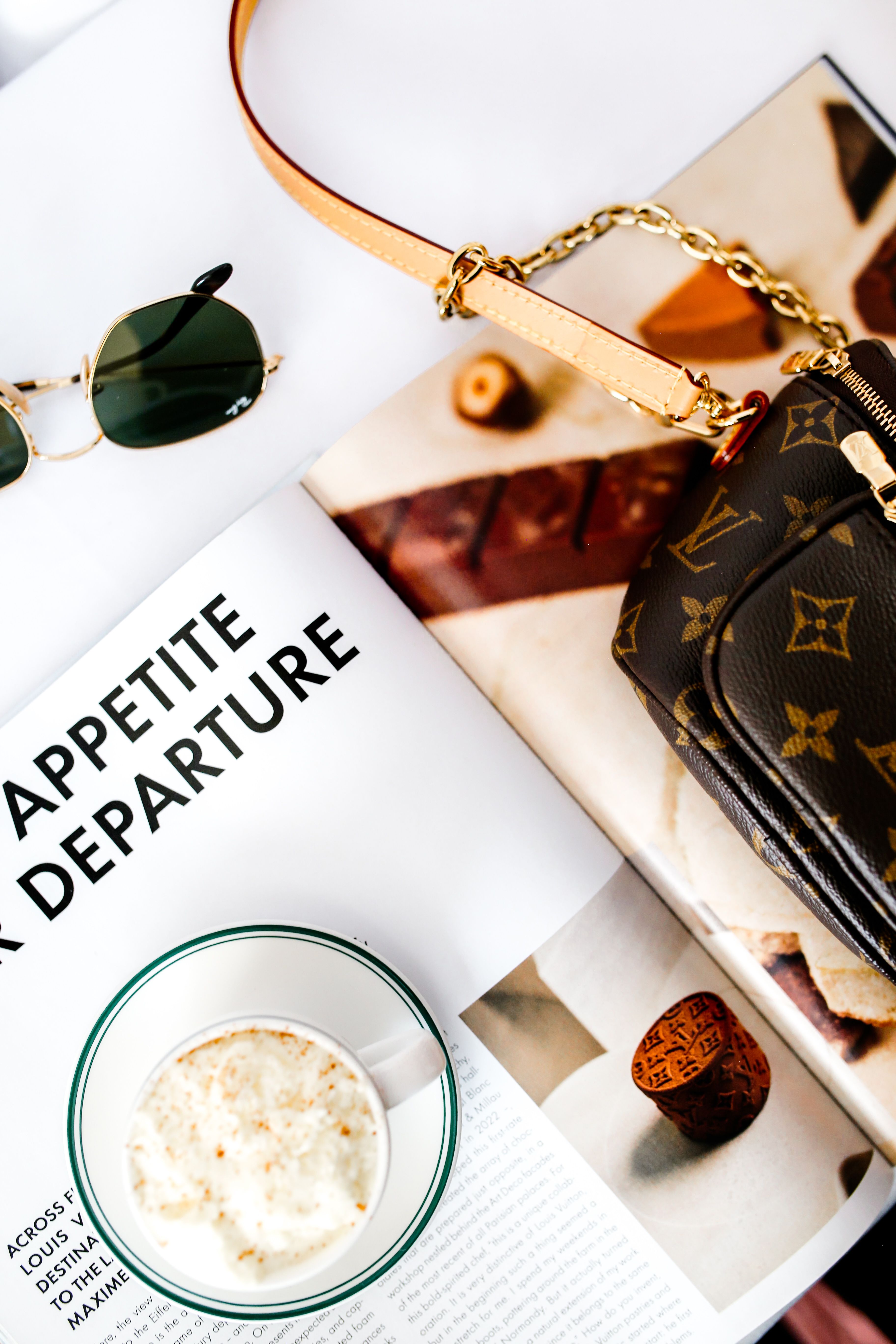
It follows a pattern with its own internal logic, and the logic is worth examining carefully because it reveals something about the Western luxury market that the market’s own mythology actively works to obscure. The same industry that positioned a Kolhapuri chappal as a Prada original has spent decades building a narrative of European craft, heritage and artisanal excellence that depends, for its credibility, on an audience not looking too carefully at labels and not caring about what built the apparent luxury.
A significant portion of what the major European luxury houses sell is manufactured in conditions that their branding does not acknowledge. Investigations by journalists and labour researchers over the past decade have documented the widespread use of subcontracted workshops across Italy and France that employ workers, many of them undocumented migrants, under conditions that the houses’ public commitments to craft and fair labour would appear to prohibit. The leather goods bearing the most recognisable luxury monograms in the world have, in documented cases, been produced in workshops in Tuscany and the Veneto where the actual making is done by Chinese workers employed by Chinese-owned subcontractors, a supply chain arrangement that allows the house to stamp “Made in Italy” on the finished object while the economics of the production bear no resemblance to the atelier mythology the stamp is supposed to invoke. Some houses source components from India and have them finished in Europe for the same reason. The label is technically accurate.
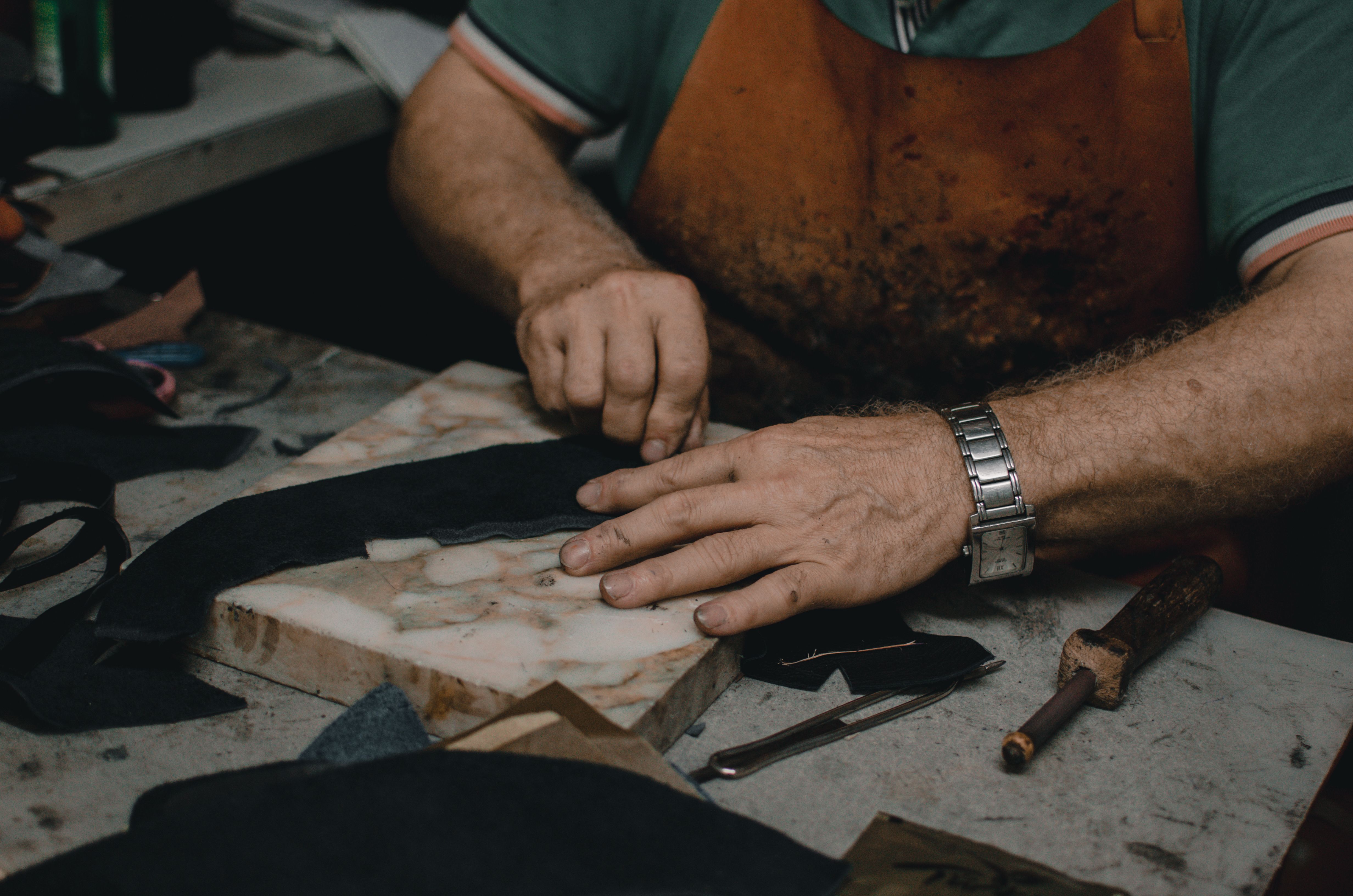
A social sub-hierarchy of this market is about whose name is on the object, whose cultural authority the name invokes and how thoroughly the audience has been educated to find that authority self-evident. A bag with an LV monogram does not need to have been made by a French craftsperson in a Parisian workshop to carry the cultural weight of French luxury, because the cultural weight has been accumulated through marketing, through aspirational imagery, through the specific positioning of European taste as the universal standard that happened during the same period that European economic and political power was universal in a more literal sense. The authority preceded the myth of the craft. The myth of the craft came later, to explain the authority.
What this means in practice is that genuinely crafted objects, made by people with deep technical knowledge in traditions that predate the European luxury market, are competing against a myth rather than against a reality, and the myth has several decades of marketing budget and global distribution infrastructure behind it. The Jaipur Watch Company produces handcrafted timepieces with dials painted in the Pichwai tradition, cases incorporating Rajasthani filigree, enamelling techniques drawn from meenakari and kundan jewellery practice and geometric patterns referencing the jaali stonework of Rajasthan’s architectural heritage. Forest Essentials formulates skincare from botanical traditions documented in Ayurvedic texts that predate the European cosmetics industry by centuries. Hidesign has been making vegetable-tanned leather goods in Puducherry since 1978 with a durability that most European fast-luxury brands at comparable price points do not match. Artchives works in Indian textiles with a design sensibility that would be described as sophisticated and directional if it were coming from anywhere in northern Europe. All of these brands encounter, consistently, a domestic and diaspora market that appreciates the quality while balking at the price, because the price is being unconsciously calibrated against a European reference point that the product is not supposed to be able to meet.
The mechanism that keeps this calibration in place is not purely economic. It is also taxonomic, meaning it operates through the language used to describe and categorise objects from different cultural origins, and the language is revealing in its inconsistencies. A kimono is a kimono regardless of where it is manufactured or who is wearing it. Its Japanese origin is part of the word and therefore part of the object, protected by the name itself from the kind of cultural detachment that allows other traditions to be absorbed without acknowledgment. A Kolhapuri chappal, when it reaches a European runway, becomes a leather sandal. African wax prints, many of them produced in West Africa using design vocabularies with specific ethnic and regional meaning, are routinely described in Western fashion as Aztec prints, a classification that is geographically, culturally and historically wrong in every possible direction but that has the advantage of referencing a civilisation that cannot object, being no longer extant in the way that Yoruba and Kente traditions are. Indian craft objects become bohemian. Roman gladiator sandals get their origin named in the descriptor. The pattern is hardly random. The West is considerably more comfortable attributing its aesthetic borrowings to dead civilisations than to living ones, because dead civilisations do not file for Geographical Indication protections or ask for royalties or point out what is actually happening.
The audience that consumes these misattributions is not stupid. It is uninformed in a specific and largely manufactured way, kept at a sufficient distance from the actual landscape of global craft and design that the European luxury brand’s claim to represent the apex of what luxury can be goes unchallenged not because the challenge is unavailable but because the information required to make it has not been placed in the audience’s path. A consumer who knows what Pichwai painting is, who has held a piece of Kanchipuram silk, who understands the technical demands of meenakari enamelwork or the material knowledge encoded in a hand-thrown Korean celadon glaze, is a consumer who is in a position to evaluate the Jaipur Watch Company’s dials or Forest Essentials’ formulations or Sulwhasoo’s hanbang skincare on something closer to their actual merits. That consumer is also a consumer the European luxury market has a structural interest in not producing.
The diaspora dimension of this is particularly pointed because diaspora communities represent people who could, theoretically, carry that knowledge into the markets where it is most absent. Korean-American, Indian-American, Chinese-American, Nigerian-American communities have cultural proximity to some of the most sophisticated craft and design traditions on earth, and the choices many of them make about how to signal status and taste tend not to reflect that proximity. The reasons are not mysterious. Assimilation into Western professional and social environments has historically been measured, partly and informally, by one’s distance from the markers of origin, and the luxury object is one of the more visible of those markers. The Indian-American who carries a Bottega bag is not making a statement about Indian craft being inferior. She is making a statement about belonging to an environment in which the Bottega bag is the legible signal, and the legibility of the signal is not something she created. The Chinese-American influencer who furnishes her apartment in Danish minimalism while her family home contains furniture of equal or greater quality made by craftspeople she grew up knowing is navigating a value system that was not built with her traditions in mind, and navigating it successfully by the system’s own terms.

What the system’s own terms do not account for is the cost of the navigation, which is not only personal but collective. Native elites in India, Nigeria, South Korea, and across their respective diasporas who orient their taste entirely toward Western reference points become, in aggregate, an educated consumer class that is not educating itself about or generating demand for the indigenous luxury economy that exists around it, which means the brands making genuinely original and technically accomplished work in those traditions remain undercapitalised, under-distributed, and dependent on either Western investment or a domestic market that has been taught to undervalue them. Forest Essentials needed Estee Lauder’s distribution infrastructure because Indian conglomerate capital was not building it. The Jaipur Watch Company’s first four years were extremely difficult because the domestic retail market would not stock expensive Indian watches, the category not being one that Indian retailers had been given reason to believe existed. The brands that have broken through most clearly - Sulwhasoo in Korean skincare, Tatcha in Japanese beauty, increasingly brands like Paris 64 in understated French craft or Luca Faloni in Italian cloth-work that operates genuinely rather than mythologically - have done so by refusing to position themselves as alternatives to the dominant hierarchy and insisting instead on being the thing itself, at the price the quality warrants, for long enough that a sufficient audience catches up.
The audience is catching up, unevenly and slowly. The generation currently coming into spending power across Asia and the African continent and in diaspora communities is more interested in indigenous luxury than any previous generation, partly because global homogenisation has made the European luxury offering feel less specific and therefore less interesting, and partly because the information environment has changed enough that the Prada-Kolhapuri story can circulate and be understood as the story it actually is rather than as a curiosity. The label is not the thing and it never was except in a tiny temporal context. What it has been, for a specific period produced by specific historical conditions, is a very effective substitute for the thing, backed by enough capital and enough marketing and enough educated incuriosity to make the substitution feel natural. It is feeling less natural than it did, which is a beginning.
Culture is the living argument a people has with itself across time. return. enters that argument as a reader, not a referee.
