
The Skin Tax
The Editors
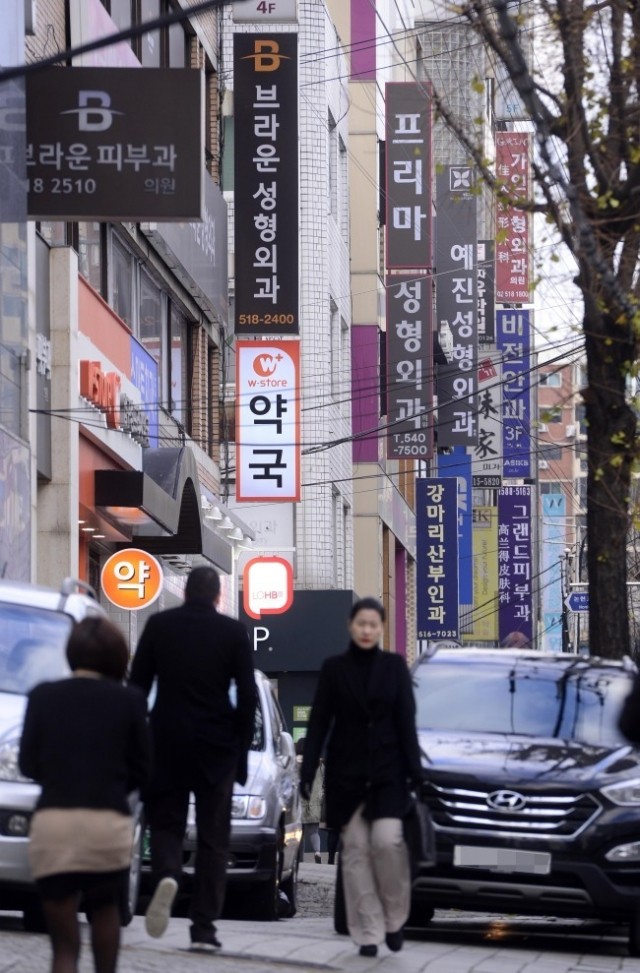
The Gangnam district of Seoul contains more plastic surgery clinics per square kilometre than anywhere else on earth, proud in their medical displays. Their signage is large and well-lit and their before-and-after photographs displayed in the windows with the same commercial confidence that a bakery uses to display its bread. Walking through the neighbourhood on a weekday afternoon, you pass dermatology clinics, rhinoplasty specialists, jaw-reduction practices and eyelid surgery centres in such quick succession that the cumulative effect is less shocking than it might be in another city and more simply matter-of-fact, a part of the commercial landscape that has been there long enough that nobody stops to look.
The procedures being offered inside these clinics follow a recognisable pattern. Double-eyelid surgery, which creates a crease in the upper eyelid is the most commonly performed cosmetic procedure in the world by total volume, and South Korea performs more of them per capita than any other country. Rhinoplasty to raise the nose bridge, jaw reduction to narrow the lower face and skin-whitening treatments of various kinds round out the most requested interventions. Taken together, the features being created by these procedures - larger eyes with a visible eyelid fold, a narrower jaw, a higher nose, lighter skin - describe a face that does not occur naturally in Korea with any particular frequency and that would not have been considered the standard of beauty in Korea before a specific and traceable set of historical circumstances arranged for it to become so.
Korean plastic surgery has its modern origin in the period immediately following the Second World War when American military surgeons began performing double-eyelid procedures on Korean women, framed at the time as reconstructive medicine. The context in which those procedures took place comes from an occupation, a profound power imbalance, a culture receiving signals from every direction about which physical features belonged to modernity and prosperity, and which belonged to the past it was supposed to be leaving behind, and it is not discussed in the clinics of Gangnam. It sits underneath the before-and-after photographs like the layer of soil beneath a building’s foundation, invisible and load-bearing.
The Standard
A 2019 survey by the Korean Plastic Surgery Association found that over sixty percent of women between the ages of sixteen and thirty had received, or expected to receive, a cosmetic procedure as a gift from a family member, most often timed to coincide with university graduation or entry into the workforce. The framing that mothers and daughters use when discussing these appointments in the accounts that Korean journalists and researchers have collected over many years, is consistently practical rather than aesthetic. The surgery is described as preparation and as something sensible to do before the real competition begins, in the same register that one might discuss buying a good suit or taking a language course.
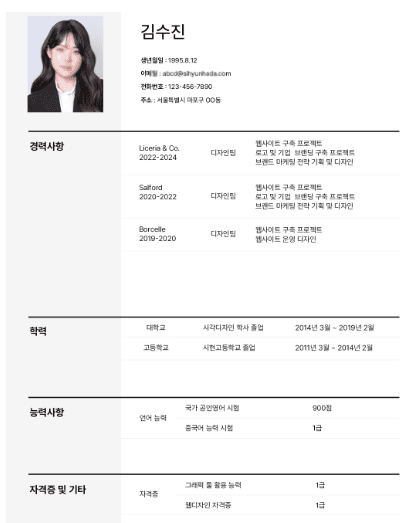
This practicality is not unfounded. The Korean Women’s Development Institute has documented, across multiple studies conducted over more than a decade, that physical appearance measurably influences hiring decisions in South Korea, that photographs on job applications are standard practice, that interviewers assess candidates on presentation in ways that affect outcomes, and that the appearance being rewarded in these assessments corresponds closely to the features being produced in the clinics of Gangnam. A young woman sitting in a consultation room is not acting on vanity or on some abstract cultural pressure she has failed to think critically about. She has been given accurate information about the environment she is entering, and she is responding to it as rationally as the environment permits.
The surgeon’s chart that typically sits on the desk at these consultations, showing the ideal proportions of the female face in precise ratios, has the visual grammar of a medical document. It looks like something produced by research, by the accumulation of clinical knowledge about what the human face should look like in its optimal state. However, much like the trend of most subjective information today being made to feel objective in order to fit in logos in rhetorical terms, it was not produced by research. It was produced by the same gradual accumulation of historical pressure and commercial interest that produced the clinics around it, and the confidence with which it is displayed is itself part of what makes the standard feel inevitable rather than constructed.
Dreams Dreamt - Delivered and Dashed
The surgical economy of Gangnam does not operate in isolation from the rest of Korean culture. It is fed, in significant part, by the entertainment industry, and specifically by the training system through which South Korea produces the idols whose faces are, in the most literal sense, the public image of what Korean femininity looks like to the rest of the world.
The major Korean entertainment agencies such as HYBE, SM Entertainment, JYP and YG recruit children as young as eleven and twelve into multi-year training programmes. The contracts that trainees and their parents sign specify training obligations, revenue arrangements and physical requirements including weight targets and, in many documented cases, expected cosmetic procedures before a trainee is considered ready to debut. The costs of those procedures are recorded against the trainee’s account and repaid, in theory, from future earnings, which means a fourteen-year-old agreeing to surgery at her agency’s direction is incurring a debt against a career that the overwhelming majority of trainees in the system never actually achieve. Industry insiders estimate that fewer than five percent of trainees ever debut, and of those who do, the majority do not generate sufficient revenue to recoup what the agency has invested in them, including the procedures.

What makes this system function, beyond the commercial logic that sustains it from the agency’s side, is the genuine power of the aspiration it offers to the girls entering it. South Korea’s Gini coefficient has been rising since the 1997 Asian financial crisis restructured the economy around the large chaebol conglomerates and created a labour market divided sharply between those inside the conglomerate system and those outside it. The middle class that Korea built between the 1960s and 1990s, one of the genuine economic achievements of its era, has been contracting visibly for two decades, and the young people growing up inside that contraction can see with considerable clarity that the routes their parents took are no longer available to them in the same way.
University attendance in South Korea is above eighty percent of each age cohort, which means a degree is not a differentiator. It is the floor of the competition and no longer a route through it. The private tutoring system known as “hagwon”, which families pay several hundred dollars a month per child to access, has created a shadow education system so demanding that South Korea’s youth suicide rate remains among the highest in the OECD, and the rates of anxiety and depression among Korean adolescents are significantly above those of regional peers in comparable education systems. Into this environment, the entertainment industry introduces the possibility of a different path, one that does not require surviving the university entrance examination or the chaebol recruitment process, one where being chosen depends on something other than the test scores that the test-preparation industry has commodified to the point of diminishing returns.
The idol’s life, as it is presented in every music video and drama and carefully managed social media account, is the life that the contracting middle class can no longer reliably promise its children through conventional means: financial security, public recognition, and the sensation of occupying a position that the world has decided to take seriously. The fact that this life is available to an extraordinarily small number of the girls who pursue it, and that the pursuit itself involves signing away significant legal and physical autonomy to an agency whose interests do not align with theirs, is not prominently featured in the presentation.
The K-pop and K-drama industries generated over twelve billion dollars in direct revenue in 2023, and that figure does not capture the secondary economy of tourism, cosmetics, fashion and food that travels in the wake of global interest in Korean cultural production. BTS sold out stadiums across five continents. Squid Game became Netflix’s most-watched series in history within its first month of release. The cultural export is real and its scale is remarkable, but the faces through which it is transmitted, that of the idols and the actors, have been selected and in many cases surgically adjusted to conform to a template whose origins are not in Korean aesthetic tradition. Researchers at Yonsei University documented in 2022 that the facial features of female K-pop idols who debuted between 2010 and 2020 showed statistically significant shifts toward specific surgical markers over the decade, shifts that were consistent across agencies, suggesting that the template is not the creative decision of any individual company but something closer to an industry standard that has calcified around the historical preference imported into Korea during the postwar period and amplified by decades of commercial reinforcement.
What Travels With the Serum
South Korean skincare has earned its global reputation through genuine product innovation. The formulations developed by Korean cosmetic chemists over the past two decades have changed dermatological practice in multiple countries, and the global enthusiasm for Korean skincare products reflects real quality rather than simply effective marketing. The ten-step routine, the sheet mask, the cushion compact, the sunscreen textures that made high-SPF products wearable in climates where earlier formulations had failed: these are legitimate contributions to how people around the world care for their skin.

What travels alongside these products into their export markets, however, is a skin ideal that is not discussed with the transparency that the ingredient lists on the packaging are. The brightening serums and whitening treatments that make up a substantial share of K-beauty’s global revenue arrive in Southeast Asia, South Asia, West Africa and East Africa into markets where the colonial period had already established lightness as a proxy for status, and they arrive carrying the authority of a globally admired culture whose products are associated with sophistication and aspiration. The preference they encode is not presented as a preference. It is presented as skincare, as health, as the neutral language of self-improvement, in the same way that the surgeon’s chart in Gangnam presents a historically constructed standard as though it were a biological fact.
The girl in Jakarta or Lagos who buys a Korean brightening serum is receiving the part of Korean beauty culture that was itself produced by what two occupying powers decided, at specific moments in the twentieth century, that a Korean face should look like. The circuit runs from colonial imposition to domestic standard to commercial product to global export to new market, and it runs continuously, quietly, and at considerable profit to the companies that have learned to sell the insecurity at one end of it to the people being produced by analogous insecurities at the other.
Park Jiyeon, who is twenty-six and works at a mid-tier cosmetics company in Seoul, had her eyelid surgery at seventeen, arranged by her mother in the weeks after her university entrance examination. She says that what she thinks about most now, nearly a decade later, is not the surgery itself but the chart on the surgeon’s desk, the one showing the ideal proportions, displayed with such confidence that it never occurred to her at the time to ask who had made it, or when, or on what basis the face it depicted had come to be the face that everything in her environment was pointing toward. She has thought about those questions more since, without arriving at a satisfying answer, which is perhaps the accurate result. The chart assembled itself gradually, out of many different pressures operating over a period much longer than anyone in that consultation room had been alive, and the most significant thing about it was not what it showed but how completely it had made itself look like it had always been there.
The Gaze looks at the systems behind representation to the complex histories, commercial interests and political arrangements that shape which stories the world tells about which peoples, and why those stories so rarely originate with the people inside them.
