

What We Owe the Dead
The Editors
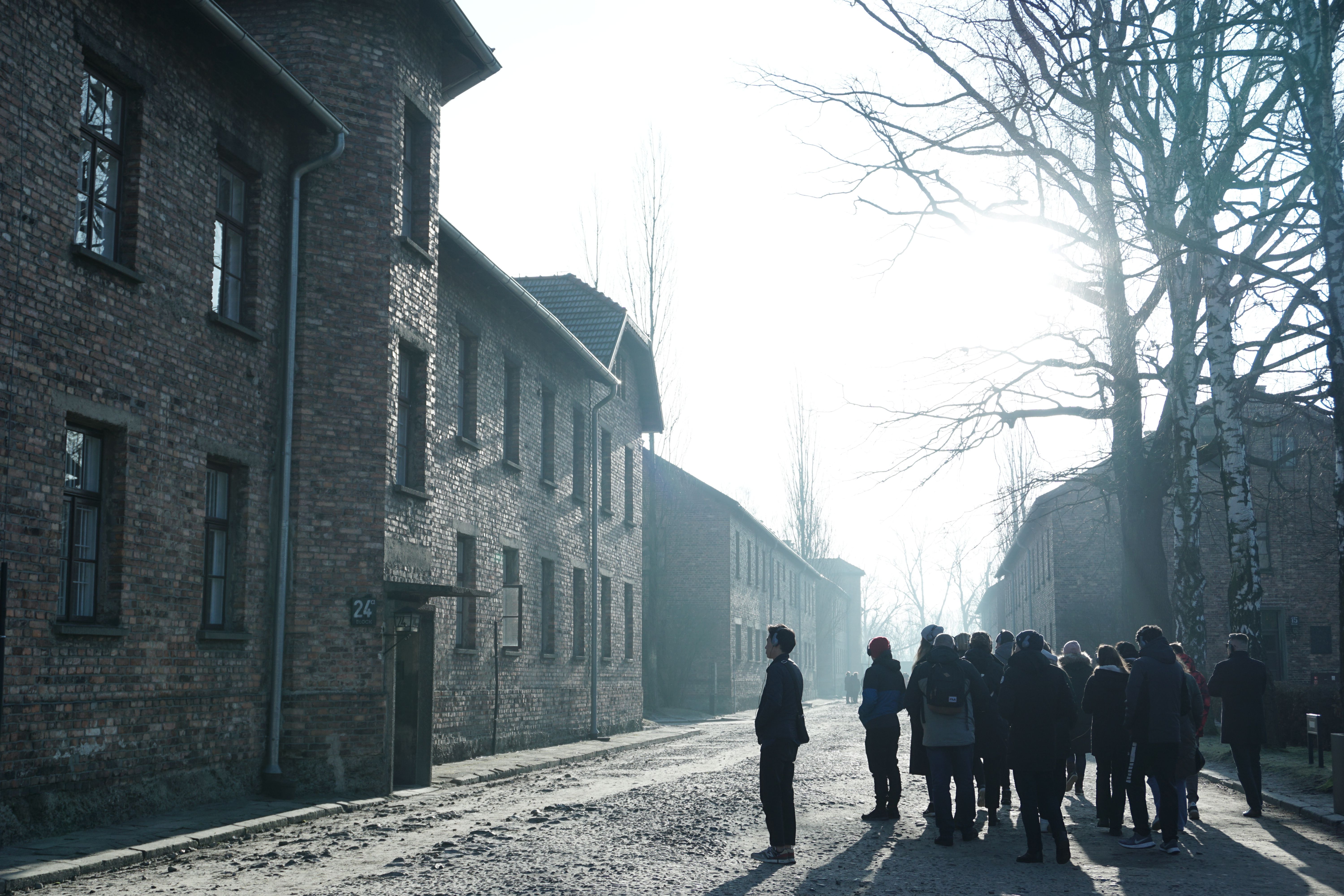
The queue for Auschwitz-Birkenau on a summer morning is long enough that the wait gives you time to think about what you are about to do, which is to pay an entry fee, follow a guided route through a site where over a million people were murdered, take photographs, and return to your hotel for dinner. The site receives over two million visitors a year. It has a gift shop. These facts sit alongside each other without resolving into a comfortable position, and the discomfort is worth staying with rather than dismissing, because the question of what it means to visit a place where atrocity occurred as a deliberate act of leisure or education or witness is one that tourism as an industry has largely decided not to ask, and that the visitors themselves tend to resolve through the private conviction that their presence is somehow different from the crowd around them, more respectful, more considered, more genuinely motivated by the desire to understand rather than simply to see.
The Killing Fields outside Phnom Penh are quieter. The site where the Khmer Rouge executed somewhere between one and two million people between 1975 and 1979 receives a fraction of Auschwitz’s visitors, partly because Cambodia draws fewer tourists overall and partly because the atrocity it memorialises does not carry the same weight in the Western historical imagination, which tends to centre its moral geography around European suffering in ways that have consequences for which sites of mass death become pilgrimage destinations and which remain peripheral. At Choeung Ek there is a stupa filled with the skulls and bones of victims exhumed from the mass graves, and visitors walk around it on a path through fields where, if it has rained recently, bone fragments and scraps of clothing still surface from the soil. The audio guide is thoughtful and specific. Visitors are asked to dress modestly and to behave with respect. Most do. Some take selfies in front of the stupa. The question of whether the selfie is a violation or simply the contemporary gesture of witness, the way this generation marks that it was present at something, does not have a clean answer.
Hiroshima is different again, partly because Japan has constructed the Peace Memorial Museum and the surrounding park with an intentionality about what the site is for that Auschwitz, for all its careful management, does not quite achieve. The A-Bomb Dome, the skeletal remains of the Industrial Promotion Hall that survived the blast, stands across the river from the museum in a state of deliberate preservation, neither restored nor allowed to decay further, held in the condition the bomb left it in as a kind of permanent argument about what nuclear weapons do to buildings and therefore to the people inside them. The museum traces the bomb’s trajectory from the physics of fission to the specific deaths of specific people with a precision that makes the abstraction of mass casualty impossible to maintain. You leave knowing the name of Sadako Sasaki. You leave knowing what happened to the skin of the people who were close enough to the hypocentre to survive the initial blast. This is not comfortable knowledge. It is, arguably, the point.

The Cellular Jail in Port Blair sits at an angle to all of these that the standard dark tourism conversation does not usually account for. It was built by the British colonial administration between 1896 and 1906 on the Andaman Islands, deliberately remote, designed to isolate Indian political prisoners, many of them independence movement activists, in solitary confinement cells arranged in a panopticon structure so that each prisoner could be observed from a central watchtower without being able to see or communicate with the others. The conditions were designed not simply to punish but to break, to produce through isolation, physical torture, forced labour and systematic degradation the kind of psychological collapse that would make political resistance impossible. Veer Savarkar spent years there. Batukeshwar Dutt, who pursued armed resistance alongside Bhagat Singh, died having spent years in the Cellular Jail. For an Indian visitor, the site is not an encounter with someone else’s history. It is an encounter with the machinery that was used on people whose resistance made the country the visitor lives in possible, built and operated by the administration whose legacy continues to shape the political and economic arrangements of that country in ways that are still being negotiated. The ethical weight of the visit is not lighter because the visitor shares a national identity with the victims. It is different, more proximate, more directly implicated in the present rather than in a history that can be visited and then left. The weight of it all is set completely aside with modern Indian tourists queuing up for smiling selfies and laughing photographs of being in jail cells.
And yet the ethical structure of the visit is not entirely different. At each of these sites, the visitor is spending leisure time and often money in a place defined by the violent death of people who did not choose to be there, and the question of what that act is for, what it is supposed to produce in the visitor and what it actually produces, is one that the sites themselves answer differently and that visitors answer differently again. The most honest answer is probably that it produces a range of things across a range of visitors, from genuine and lasting moral reckoning to a checkbox on a list of significant places, from the kind of witness that changes how a person understands the world to the kind of consumption that changes very little except the visitor’s sense of having been somewhere important. The sites cannot control which of these they produce in any given person, and the infrastructure of guided tours, audio guides and visitor management can encourage the more reflective response without guaranteeing it.
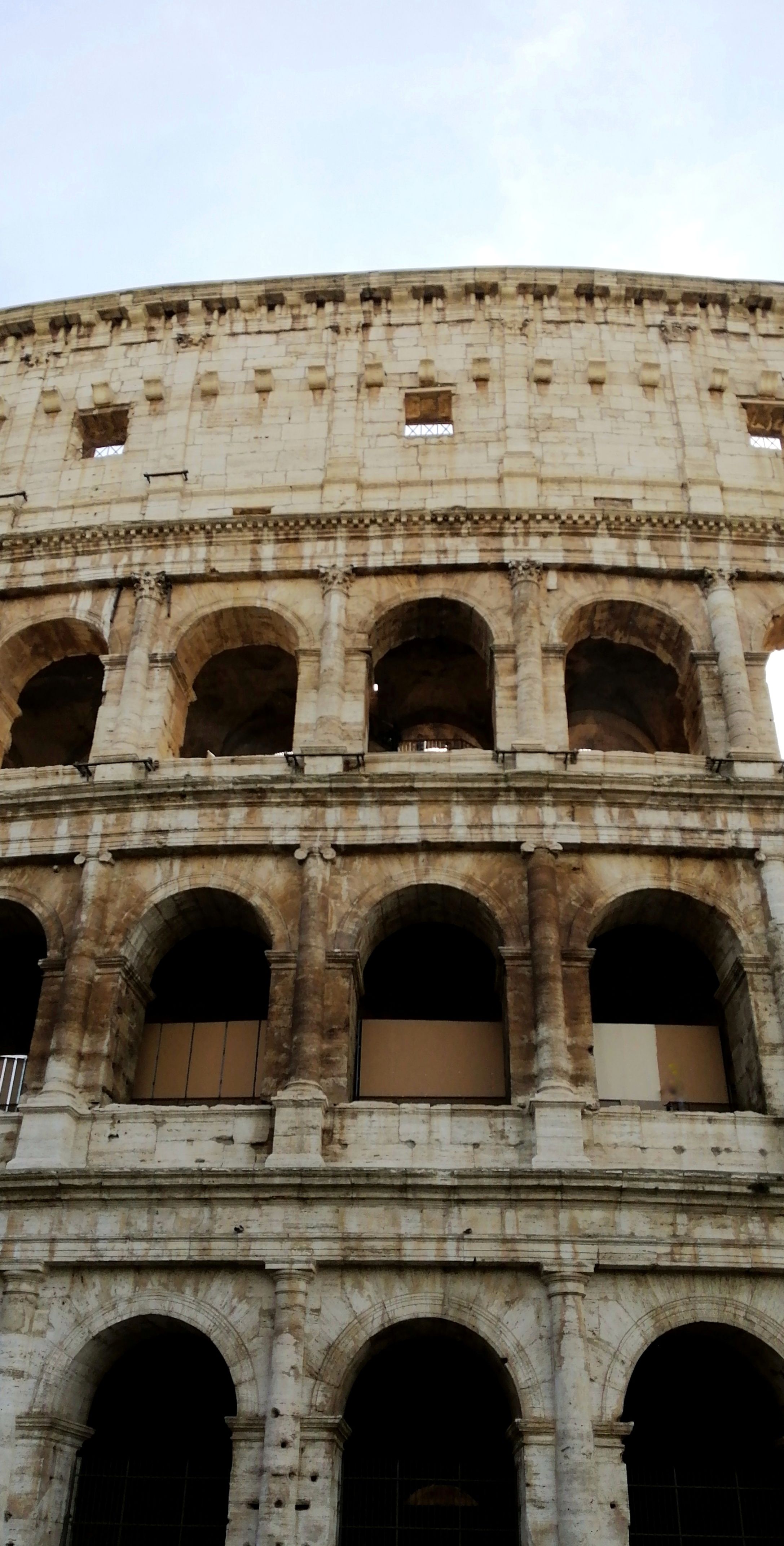
The Colosseum in Rome sits at the far end of a temporal spectrum from all of these, and the difference in how it feels to visit it is instructive. Somewhere between fifty thousand and eighty thousand people could have died in the Colosseum over the centuries of its active use, in gladiatorial combat, in executions, in the staged hunts of wild animals, in whatever other spectacles the Roman programme of public entertainment required. This is a significant number of deaths and they were violent, but the visitor who walks through the Colosseum today does not experience it as a site of atrocity in the way that Auschwitz or the Killing Fields registers as one. The temporal distance is part of the explanation, yet not the whole of it. What has also happened is that the civilisation that built and used the Colosseum no longer exists in any continuous sense. Rome as a political and cultural entity, the Rome that held the games and built the aqueducts and maintained the legal and administrative framework that the games were part of, ended. What succeeded it, through the particular discontinuities of late antiquity, the migrations, the religious transformation, the fragmentation of administrative authority, is connected to Rome by geography and some institutional inheritance but is not Rome in the sense that would make a living Italian feel implicated in the Colosseum’s deaths the way a living German might feel implicated in Auschwitz’s. The Colosseum memorialises a civilisation that has become, in a meaningful sense, ancient history, which is a different category from recent history and produces a different emotional register in the visitor.
Egypt and China complicate this. Both are civilisations with continuous habitation of their territories across the millennia that separate the present from the monuments, but both have undergone transformations so profound, in religion, in political structure, in the ideas and ideals that the state organised itself around, that the ancient and the contemporary feel like adjacent rooms rather than a continuous dwelling. The Egypt that built the pyramids worshipped a pantheon that no living Egyptian practices. The China that built the Great Wall was organised around a cosmological and political framework that the contemporary Chinese state has a complex and selective relationship with. A Chinese visitor to the Forbidden City and an Egyptian visitor to Luxor are encountering an ancestry that is theirs in a genetic and territorial sense but that requires an act of historical imagination to connect to in a living way, because the thread of continuous practice has been substantially broken.
The places where that thread has not been broken are where the ethics of visitation become most demanding and least discussed. When a Jain family circumambulates the Gommateshwara statue at Shravanabelagola, they are participating in a tradition of pilgrimage that has been continuous since the statue was carved in 981 CE, practicing a form of devotion that connects them directly to a living community of belief and practice with an unbroken lineage. When a Navajo family maintains the ceremonial practices that their ancestors maintained, they are not performing history for an audience. They are living it, and the living nature of the tradition is precisely what makes the tourist gaze most inappropriate and most common. The heritage tourism industry has developed sophisticated ways of packaging living traditions as experiences for outside consumption, and the communities whose traditions are being packaged have developed varying and often contradictory relationships with that packaging, some finding in it an economic necessity, some a form of violation, most something more complicated than either.
What distinguishes the dark tourism site from the living tradition is that the dark tourism site is, at least in principle, designed to be visited. The memorialisation is intentional. The Auschwitz-Birkenau State Museum exists because the Polish government and the international community decided that preserving the site and making it accessible served a purpose, that the particular horror of what happened there needed to be kept visible rather than allowed to disappear into the landscape. The Cellular Jail is maintained by the Indian government as a National Memorial Monument for the same reason, and the sound and light show performed there nightly is designed to produce in visitors a specific emotional and historical understanding of what the site represents. These institutions have decided what the visit is for and built infrastructure around that decision.
The living traditions have not made that decision, or have made it only partially and under pressure, and the visitor who treats a temple or a ceremony or a sacred landscape with the same consuming attention that they bring to a museum is making a category error that the heritage tourism industry actively encourages and almost never names. The Colosseum can absorb a selfie in a way that a Jain pilgrimage site or a Lakota sacred ground cannot, not because the deaths in the Colosseum mattered less but because what happens at the Colosseum now is already a performance of history, while what happens at the living site is history still in the process of being made, and being witnessed by someone who paid for the experience is not the same as being part of it.

The queue at Auschwitz moves forward. The guide explains what the visitors are about to see. The obligation the visit creates in the person who makes it is not discharged by the making of it. That is, perhaps, the most important thing that any of these sites have to teach, and it is the thing most easily lost in the logistics of getting there.
Travel writing has always been the literary form of power. This traveller arrives somewhere, not discovers it.
